
What is iPhone modem chip: the C1 explained
The iPhone modem chip is the dedicated processor that converts antenna radio signals into digital data and sends digital data back out as radio signals, making every call, text, and mobile internet session possible. Apple’s C1 is the first in-house 5G modem the company has ever built, replacing third-party suppliers entirely. Understanding what this chip does, and why Apple built it, tells you a great deal about where iPhone connectivity is heading. This guide covers the C1’s architecture, its real-world impact on battery life and performance, and what Apple’s multi-generation modem plan means for you.
What is iPhone modem chip and how does the C1 work?
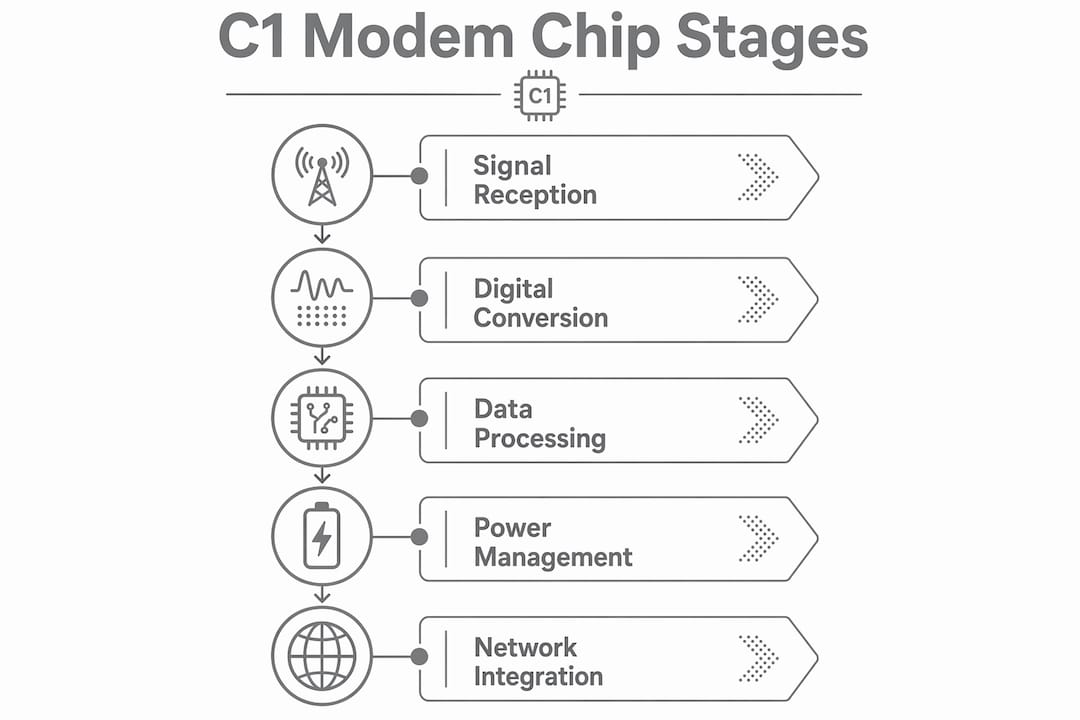
The modem chip sits between your iPhone’s antenna array and its main processor. Its job is to handle all cellular communication, translating radio frequencies into the binary data your apps and services use. Without it, your iPhone is a Wi-Fi-only device.
The C1 is not a single piece of silicon. It is a multi-chip module that separates two distinct components: the baseband processor and the RF transceiver. The baseband processor handles the logic of cellular communication, including signal modulation, demodulation, and protocol management. The RF transceiver handles the physical radio signals, converting between analogue radio waves and digital signals.
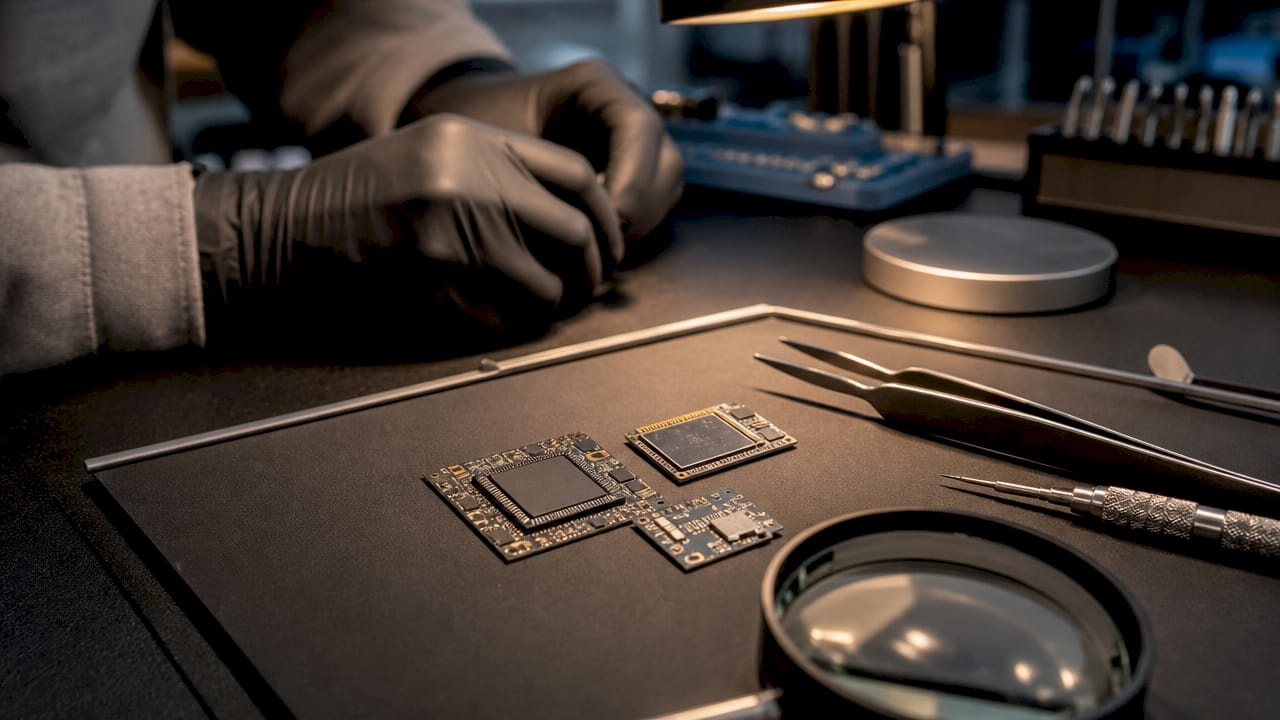
Apple uses different fabrication processes for each component. The baseband processor uses a 4nm fabrication process, while the RF transceiver uses a 7nm process. Smaller fabrication nodes generally produce chips that consume less power and generate less heat, which matters considerably for a component running continuously in your pocket.
Key functions the C1 performs
Signal modulation and demodulation: The chip encodes outgoing data onto radio waves and decodes incoming radio waves back into data.
Carrier aggregation: The C1 combines multiple frequency bands to increase data throughput and connection reliability simultaneously.
Dynamic power management: The chip adjusts its power draw in real time to prevent overheating across varying thermal environments.
Protocol handling: It manages the handshake between your iPhone and cellular towers, including 5G NR, LTE, and legacy standards.
Component | Fabrication process | Primary role |
Baseband processor | 4nm | Signal logic, modulation, protocol management |
RF transceiver | 7nm | Radio signal conversion, antenna interface |
What makes the C1 different from third-party modems?
The most significant difference is integration. Previous iPhones used modems from third-party suppliers, which operated largely independently from the main processor. The C1 operates in a feedback loop with the A18 SoC for real-time traffic prioritisation. That means the A18 chip actively manages what the modem does, moment to moment, based on what your apps are demanding.
This tight integration produces a specific benefit that third-party designs cannot replicate easily. The software-hardware handshake between the C1 and the A18 enables AI-based network prediction, which allows the modem to enter deep sleep states when full connectivity is not needed. This saves battery life beyond what hardware improvements alone could achieve.
Apple markets the C1 as the most power-efficient modem ever integrated into an iPhone. That claim is grounded in the dynamic management architecture rather than the fabrication node alone.
How Apple rolled out the C1
Apple chose a deliberate, cautious approach. The C1 launched first in the iPhone 16e, an entry-level model, rather than the flagship iPhone 16 Pro. Industry analysts note this reflects a focus on reliability and iterative improvement before the chip moves to flagship devices. Apple tested the C1 with 180 carriers across 55 countries before launch, which signals how seriously global compatibility was taken.
Key differences from third-party modem designs:
Direct integration with Apple silicon for real-time task management
AI-driven network prediction enabling deep sleep states
Power consumption actively managed by the A18 rather than the modem alone
Carrier testing at a scale that supports global deployment from day one
Pro Tip: If your iPhone 16e runs noticeably cooler during video calls than older models, the C1’s dynamic power management is the reason. The chip throttles its own activity based on thermal feedback from the A18.
How does the modem chip affect your day-to-day iPhone experience?
The modem chip’s impact on your daily use is more direct than most people realise. Every time you stream video, send a message, or load a webpage on mobile data, the modem is actively managing which network tasks get priority and how much power to draw. Poor modem design shows up as dropped connections, slow handovers between towers, and a warm device after moderate use.
The C1 addresses these issues through real-time prioritisation. When you are on a voice call, the modem deprioritises background data tasks. When you are downloading a large file, it aggregates frequency bands to maximise throughput. This is not new in principle, but the C1 does it in coordination with the A18 rather than independently, which makes the decisions faster and more accurate.
Here is how the C1’s modem chip function affects specific scenarios:
Streaming video on mobile data: Carrier aggregation pulls from multiple bands simultaneously, reducing buffering even in areas with mixed signal strength.
Battery life during heavy data use: The A18’s dynamic management reduces modem power draw during periods of low network activity, extending screen-on time.
Device temperature under load: Optimised power management prevents overheating by scaling modem activity to match thermal conditions.
Switching between towers: Faster handover protocols reduce the brief connectivity drops you notice when moving between coverage areas.
Carrier compatibility: Firmware updates continue to refine modem-to-carrier interaction, particularly during the early adoption phase of new hardware.
Firmware updates play a larger role in modem performance than most users appreciate. Early firmware releases commonly target carrier handshake protocols as Apple refines compatibility across diverse markets. Keeping your iPhone updated is not just about security. It directly affects how well your modem communicates with your network.
Pro Tip: If you notice connectivity issues after a carrier network change or SIM swap, check for a pending iOS update first. Modem firmware patches are often bundled with standard iOS releases and can resolve carrier handshake problems without any hardware intervention.
What does Apple’s modem roadmap mean for future iPhones?
Apple’s modem development plan runs across at least three generations: C1, C2, and C3. The C1 is the foundation. Future chips will focus on catching up with and surpassing the performance of third-party modems at the top of the market, then spreading across all iPhone and Apple cellular product lines.
Johny Srouji, Apple’s head of hardware technologies, has described the C1 as a platform for future differentiation rather than a direct benchmark competitor today. That framing matters. Apple is not trying to win a specification sheet comparison with the C1. It is building the infrastructure to control its entire cellular technology stack, from antenna design to software protocol management.
What this means for you as an iPhone user:
Broader device coverage: Future C-series modems will appear in iPad models, Apple Watch, and potentially Mac devices with cellular capability.
Performance improvements: Each generation targets specific weaknesses, with C2 and C3 expected to close the gap on mmWave 5G support and peak download speeds.
Repair and diagnostics: As modem performance becomes tied to the A18 and future SoCs, modem performance depends on the overall health of the main processor. A failing SoC can now present as a connectivity problem.
Software-defined improvements: Apple can push modem capability improvements through firmware without hardware changes, extending the useful life of each chip generation.
The repair implication is worth noting specifically. Technicians working on C1-equipped iPhones must distinguish between a baseband processor fault and an RF transceiver fault within the multi-chip module. These are separate failure points with different diagnostic approaches. A device showing no signal may have a damaged RF transceiver, while one showing signal but failing data sessions may have a baseband logic fault. Understanding iPhone repair warning signs early can prevent a minor connectivity issue from becoming a full board replacement.
Key takeaways
The iPhone modem chip, specifically the C1, is the first fully integrated in-house cellular modem Apple has built, and its tight coupling with the A18 SoC fundamentally changes how iPhones manage power, connectivity, and thermal performance.
Point | Details |
C1 is a multi-chip module | It separates the baseband processor (4nm) and RF transceiver (7nm) into distinct components with different failure modes. |
A18 integration drives efficiency | The C1 operates in a feedback loop with the A18 SoC, enabling AI-driven power management unavailable in third-party designs. |
Carrier testing was extensive | Apple tested the C1 with 180 carriers in 55 countries before launch, supporting reliable global connectivity from day one. |
Firmware updates matter | Early iOS updates frequently include modem firmware patches that improve carrier compatibility and connection stability. |
Multi-generation roadmap | Apple plans C1, C2, and C3 generations, aiming to replace third-party modems across all Apple cellular devices over time. |
Why the C1 modem matters more than the spec sheet suggests
From my experience working with iPhone hardware at Rapidrepairsldn, the shift to an in-house modem is more significant than most users realise at first glance. The C1 is not just about Apple saving money on components. It is about Apple gaining control over the one part of the iPhone it previously could not fully optimise.
Third-party modems are designed to work across many devices from many manufacturers. That means they carry compromises. Apple’s C1 is designed for one ecosystem, one processor, and one set of software priorities. That specificity is where the real gains come from. The battery life improvements are real, and the thermal management improvements are noticeable in everyday use.
The part that concerns me from a repair perspective is the deepening dependency between the modem and the main SoC. When modem performance is contingent on the A18’s health, a board-level fault can present in unexpected ways. A customer who comes in reporting poor signal may actually have a processor issue, not a modem issue. That diagnostic complexity is new, and technicians need to account for it.
My advice for users: treat firmware updates as modem maintenance, not just security patches. And if you experience sudden connectivity drops on a C1-equipped iPhone, check for common iPhone hardware faults before assuming the problem is your network.
— Joshua
iPhone connectivity issues? Rapidrepairsldn can help
If your iPhone is dropping signal, failing to connect to mobile data, or running unusually warm during calls, the modem chip or its interaction with the main board may be the cause.

Rapidrepairsldn specialises in iPhone hardware repair, including board-level diagnostics for connectivity and modem-related faults. The team works across all iPhone models, with fast turnaround and clear diagnosis before any repair begins. Whether you have a C1-equipped iPhone 16e or an older model with a third-party modem, the approach is the same: accurate diagnosis first, repair second. Visit the iPhone repair page to book a diagnostic or get in touch with the team directly.
FAQ
What does the iPhone modem chip actually do?
The iPhone modem chip converts radio signals from cellular towers into digital data your apps can use, and sends data back out as radio signals. It handles all mobile connectivity, including calls, texts, and mobile internet.
Is the Apple C1 modem better than previous iPhone modems?
Apple markets the C1 as the most power-efficient modem ever in an iPhone, with dynamic power management driven by the A18 chip. Its primary advantage is integration with Apple silicon rather than raw speed benchmarks.
Why did Apple build its own modem chip?
Apple built the C1 to gain full control over iPhone communication technology, enabling tighter integration with its own processors and software. The long-term plan involves replacing third-party modem suppliers across all Apple cellular devices.
Can a modem chip fault cause my iPhone to lose signal?
Yes. A fault in either the baseband processor or the RF transceiver within the C1 module can cause signal loss or data failure. These are distinct components with different failure modes, so accurate diagnosis requires board-level testing.
Do firmware updates affect modem performance?
Firmware updates directly affect how the modem communicates with carriers. Early firmware releases commonly target carrier handshake protocols, meaning an iOS update can resolve connectivity issues without any hardware repair.
Recommended
Comments