
iPhone back glass explained: repair options and what to expect
- Jul 5
- 8 min read
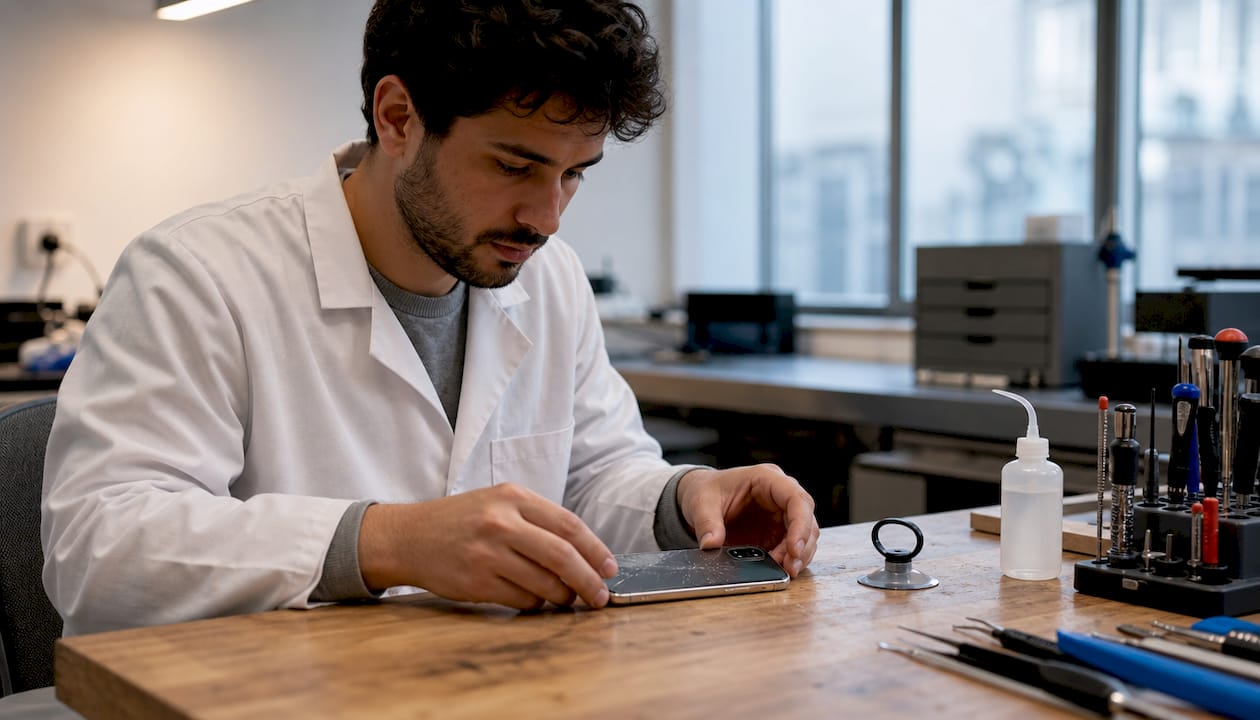
The iPhone back glass is defined as the rear glass panel that protects internal components, supports wireless charging, and maintains the structural integrity of the device. When it cracks, your options are not simply “repair or replace.” The right approach depends on your iPhone model, the condition of the chassis, and the repair method used. Understanding these factors saves you money and prevents further damage.
iPhone back glass explained: what it is and why it matters
The rear glass panel on an iPhone does three jobs. It protects the internal components from physical impact, it enables wireless charging by allowing electromagnetic signals to pass through, and it contributes to the device’s overall structural rigidity. Damage to this panel affects all three functions at once.
The term “back glass repair” covers two distinct procedures: glass-only repair and full housing replacement. Glass-only repair removes the cracked panel while keeping the original frame intact. Full housing replacement swaps the entire rear assembly, including the frame. Which method applies to your device depends heavily on which iPhone model you own.
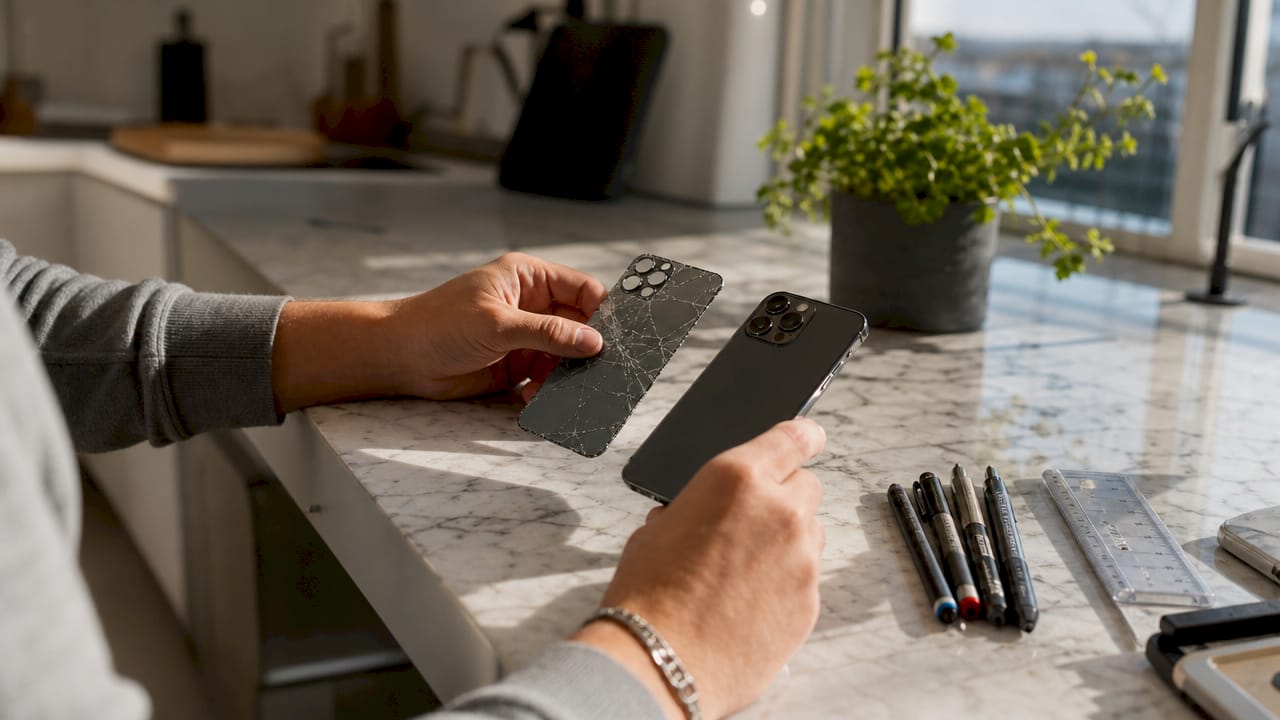
Repairability varies significantly by model. Older iPhones used bonded rear glass that was extremely difficult to remove without damaging the frame. Newer models have moved toward more modular designs. Glass-only back repairs are often possible on iPhone 13 to iPhone 16 models, preserving the original frame and internal components. That shift in design philosophy has made professional repair faster and less disruptive to the rest of the device.
How does iPhone back panel repair work by model?
The repair process differs substantially depending on your iPhone generation. Two primary methods exist: laser separation and mechanical removal.
Laser separation uses a precision laser to cut through the adhesive bonding the glass to the frame. This method is faster and reduces the risk of frame damage. Mechanical removal uses heat and prying tools to lift the glass away, which carries a higher risk of scratching or bending the chassis if done incorrectly.
Laser separation techniques enable careful removal of cracked glass without housing replacement on supported models. This makes glass-only repair a realistic option for iPhone 13 through iPhone 16 owners. Earlier models, particularly those from iPhone X through iPhone 12, used more aggressively bonded glass that often required full housing replacement to achieve a clean result.
The iPhone 16 Pro introduced a redesign that allows back glass removal without removing the entire housing, but the process still requires careful handling of flex cables connected to the panel. Components including MagSafe coils, the microphone, and the flash module are attached directly to the glass, making the procedure delicate even for experienced technicians.
More recently, modular designs like those found in the iPhone 17e allow partial disassembly without removing the front display at all. That approach reduces repair time and lowers the risk of introducing new faults during the process.
Model series | Typical repair method | Housing replacement needed? |
iPhone X to iPhone 12 | Mechanical or laser | Often yes |
iPhone 13 to iPhone 15 | Laser separation | Rarely, if chassis is straight |
iPhone 16 series | Laser, with flex cable care | Only with frame damage |
iPhone 17e | Modular disassembly | No, by design |
Pro Tip: Always ask your repair technician which method they use before agreeing to a repair. Laser separation is the preferred standard for iPhone 13 and later models. Mechanical removal on these devices increases the risk of chassis damage.
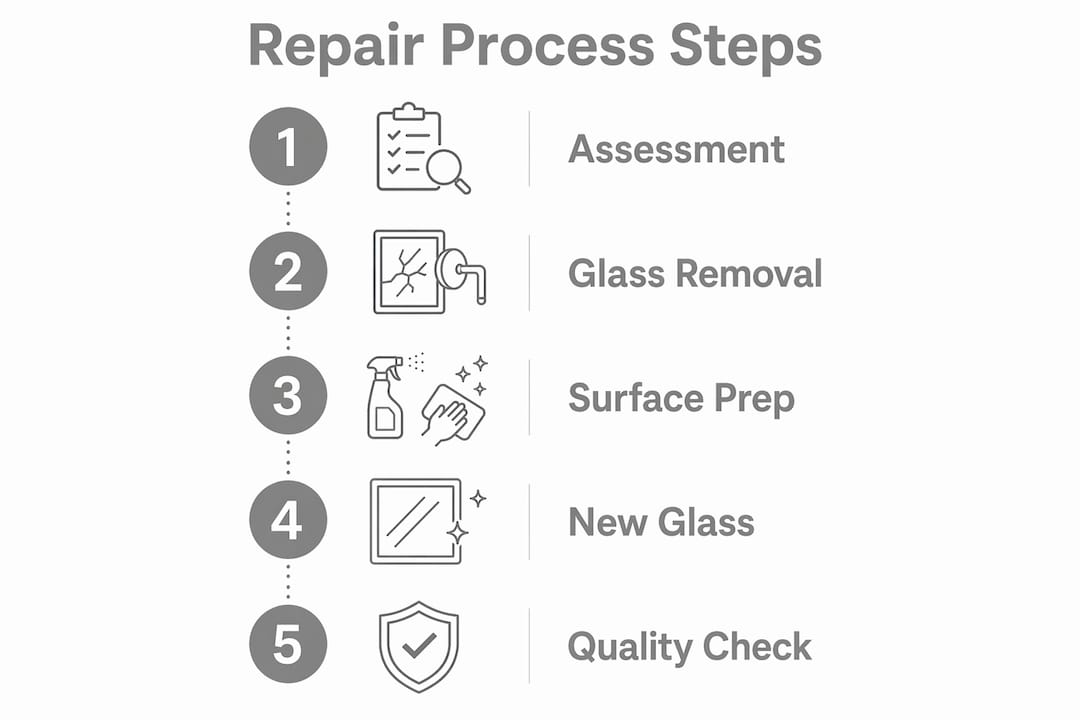
Adhesive removal and surface preparation must be meticulous to ensure new glass seats flush and restores structural integrity. Residual glass dust or old adhesive compromises the seal and fit, risking dust and water ingress. This step is where many lower-quality repairs fail.
What are the most common post-repair issues?
Post-repair problems are almost always caused by poor preparation or misalignment during fitting. Knowing what to look for helps you catch a substandard repair early.
Common issues include:
Gaps between the glass and frame. These allow dust and moisture to enter the device. Run your fingernail around the edge of the panel after repair. Any gap is a red flag.
Creaking when you press the back. This indicates the glass is not fully bonded and will likely lift further over time.
Wireless charging failure or slow charging. Poor adhesion or misalignment post-repair can cause slow charging, heat buildup, or total wireless charging failure. Test MagSafe and wireless charging immediately after collecting your device.
Heat buildup during charging. Misaligned MagSafe coils generate excess heat when they are not correctly positioned against the charging pad.
Moisture ingress after light exposure. A poorly sealed back glass allows water to reach internal components even from minor splashes.
Wireless charging and MagSafe performance post-repair are key indicators of a successful back glass replacement. If either function is degraded after the repair, the glass is likely misaligned or the adhesive has not cured correctly.
Pro Tip: Before leaving the repair shop, place your iPhone on a MagSafe charger and a standard Qi pad. Both should begin charging within a few seconds. If either fails, ask the technician to inspect the alignment before you leave.
You can find a broader list of symptoms that signal a repair has gone wrong in this guide to iPhone warning signs.
Glass-only repair versus full housing replacement: which should you choose?
The decision comes down to the condition of your chassis. If the frame is straight and undamaged, glass-only repair is the better option. It costs less, preserves your original components, and is completed faster.
If your iPhone has been dropped on a corner or shows any visible bending, the calculation changes. A bent or twisted chassis makes glass-only repairs likely to fail. Misaligned panels create gaps that allow moisture ingress and functional issues. In these cases, full housing replacement is the correct choice, even though it costs more.
Factor | Glass-only repair | Full housing replacement |
Cost | Lower | Higher |
Repair time | Faster | Longer |
Best for | Straight chassis, no frame damage | Bent frame, corner impact damage |
Preserves original parts | Yes | No |
Risk of recurrence | Low if chassis is straight | Very low |
For a detailed breakdown of what different repair types cost across iPhone models, the phone repair costs guide covers current pricing in pounds. If you are weighing repair against buying a replacement device entirely, the repair vs replacement guide provides a clear framework for that decision.
What to expect after iPhone back glass repair
Post-repair care determines how long your repair lasts. Follow these steps after collecting your device.
Avoid moisture for 24 hours. The adhesive needs time to cure fully. Even brief water exposure during this window can compromise the seal.
Test all wireless functions. Check MagSafe, standard Qi charging, and NFC payments within the first hour.
Inspect the edges daily for the first week. Early signs of lifting glass are easier and cheaper to fix than a fully detached panel.
Use a case with raised rear edges. This protects the glass from direct impact if the device is dropped again.
Book a diagnostic if anything feels off. Cracks in the back glass often mask deeper damage such as loose charging ports, misaligned MagSafe coils, or compromised battery health. A full diagnostic test after replacement is critical beyond visual inspection.
Professional repairs use high-quality adhesives but cannot restore factory-grade IP68 waterproofing fully. Post-repair phones should be treated as non-waterproof, avoiding moisture exposure. This is not a failure of the repair. It is a physical limitation of any non-factory reassembly process.
Key takeaways
The most effective approach to iPhone back glass repair is choosing the correct method for your specific model and chassis condition, then verifying wireless charging performance immediately after the repair is complete.
Point | Details |
Repair method depends on model | iPhone 13 and later support glass-only repair; older models often need full housing replacement. |
Chassis condition is decisive | A bent or twisted frame makes glass-only repair likely to fail; choose housing replacement instead. |
Test wireless charging immediately | MagSafe and Qi performance are the clearest indicators of a successful back glass repair. |
IP68 rating is not restored | Professional repairs cannot fully replicate factory waterproofing; treat your device as non-waterproof post-repair. |
Full diagnostics matter | Back glass damage often hides faults in the battery, charging port, or MagSafe coil alignment. |
What I have learned from years of back glass repairs
The single biggest mistake I see is people delaying a back glass repair because the crack “is only on the back.” That reasoning is understandable, but it misses what is actually happening inside the device. A cracked rear panel is not just a cosmetic problem. It is an open door for dust, moisture, and physical stress to reach components that are far more expensive to fix.
The second mistake is choosing a repair based on price alone. Laser separation equipment is costly. A repair priced significantly below the market rate almost always means mechanical removal on a device that should have laser treatment, or adhesive that has not been properly prepared. Both lead to the gaps, creaks, and charging failures described earlier.
I also think the industry undersells how much the modular designs in recent iPhone models have improved the situation for users. The iPhone 17e’s approach, where the back glass comes away without disturbing the front display, is genuinely good engineering. It reduces the number of components at risk during repair and shortens the time the device spends open on a workbench. That matters for quality outcomes.
My honest advice: get the repair done promptly, choose a technician who uses laser separation on supported models, and always ask for a post-repair diagnostic. The diagnostic is not an upsell. It is the only way to confirm the repair has not introduced a new problem while solving the original one.
— Joshua
Rapidrepairsldn: professional iPhone repairs in London
Rapidrepairsldn offers professional iPhone back glass repair and a full range of device repair services, including screen replacement, battery swaps, charging port repair, and water damage assessment. Every repair is carried out by experienced technicians using quality parts and proper adhesive techniques.
Turnaround times are fast, and every repair comes with a quality check before your device is returned to you. Whether your iPhone needs a glass-only repair or a full housing replacement, Rapidrepairsldn can assess your device and recommend the right fix. Book your repair or get in touch through the Rapidrepairsldn website to find out more.
FAQ
What is iPhone back glass and why does it crack?
The iPhone back glass is the rear panel that protects internal components and enables wireless charging. It cracks under impact because glass prioritises signal transparency over impact resistance.
Can iPhone back glass be repaired without replacing the whole phone?
Yes. Glass-only repair is possible on iPhone 13 through iPhone 16 models using laser separation techniques, preserving the original frame and internal components.
Does back glass repair restore water resistance?
No. Professional repairs use high-quality adhesives but cannot restore the original IP68 waterproofing rating. Treat your device as non-waterproof after any back glass repair.
How do I know if my back glass repair was done correctly?
Test MagSafe and wireless charging immediately after repair. Poor adhesion or misalignment causes slow charging, heat buildup, or total wireless charging failure.
Is it worth repairing back glass on an older iPhone?
It depends on the chassis condition and the cost of repair relative to the device’s value. The repair vs replacement guide provides a clear framework for making that decision.
Recommended
Comments