
Why iPhone screens crack easily: the real reasons
- Jul 8
- 8 min read
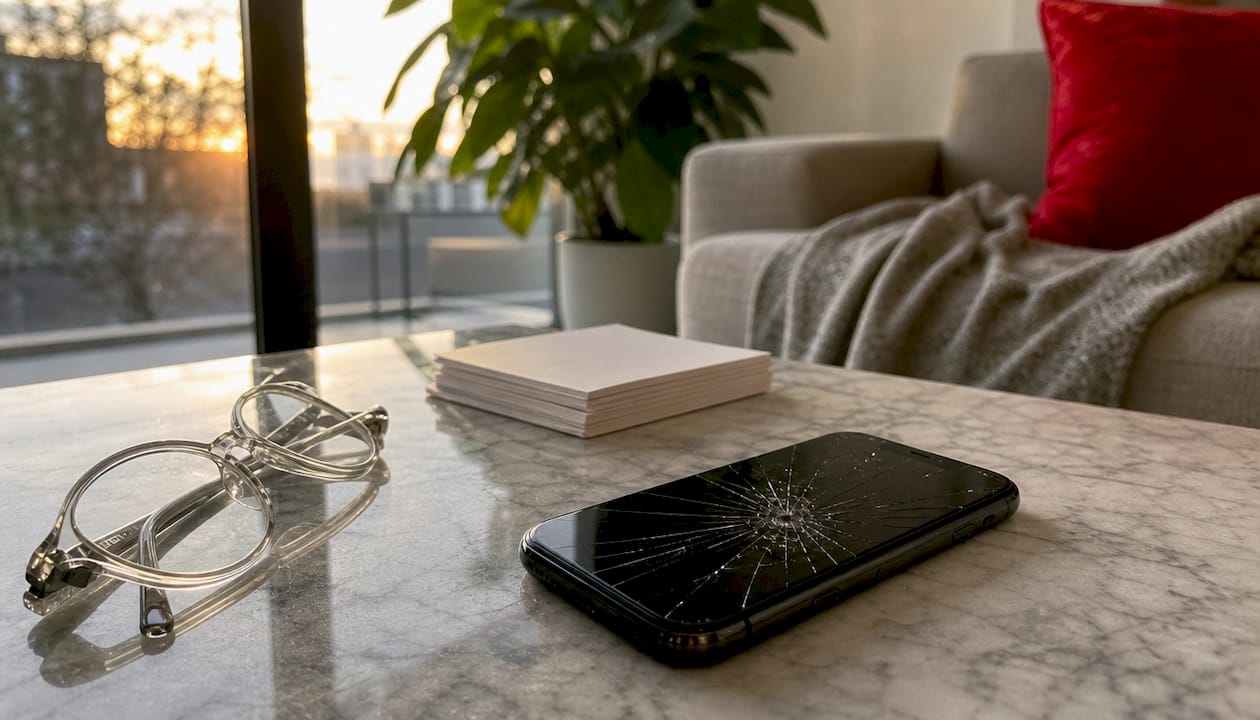
iPhone screens crack easily because the glass used in their construction must balance two competing properties: scratch resistance and impact toughness. These two qualities cannot be maximised simultaneously. The result is a display that resists surface scratches reasonably well but remains vulnerable to shattering on impact. Apple’s Ceramic Shield technology, introduced to address these iphone screen durability issues, represents a genuine improvement. Yet even the latest models fail standardised drop tests. Understanding why this happens puts you in a much better position to protect your phone.
Why does iPhone glass break easily? The material science explained
The hardness-toughness trade-off is the core reason iPhone glass breaks as readily as it does. Harder glass resists scratches but becomes more brittle under sudden impact. Softer glass absorbs impact better but scratches far more easily. No current glass formulation solves both problems at once. This is not a flaw in Apple’s engineering. It is a fundamental limit of materials science.
Apple’s Ceramic Shield glass, used across recent iPhone models, is a ceramic-reinforced aluminosilicate glass. The ceramic crystals embedded within the glass matrix improve scratch resistance and give the display a higher Mohs hardness rating than standard smartphone glass. The trade-off is that the same crystalline structure makes the glass less able to deform under sudden stress. When you drop your phone, the glass cannot flex to absorb the energy. Instead, it fractures.
Thinner displays flex more under bending stress, which increases the risk of cracking along the edges.
Larger screen sizes create a greater surface area exposed to impact, raising the probability of a damaging contact point.
Titanium frames, used in Pro models, transmit impact energy efficiently. That efficiency means more force reaches the glass rather than being absorbed by the frame.
Oleophobic coatings wear away over time and can make the screen look damaged before the glass itself is structurally compromised.
Pro Tip: If your screen looks scratched or dull but the glass feels smooth to the touch, the oleophobic coating may have worn away rather than the glass itself being damaged. This is a cosmetic issue, not a structural one.
How micro-scratches weaken your iPhone screen over time
A single drop is not always the cause of a cracked screen. Invisible damage builds up gradually and makes your screen far more likely to shatter from an impact that would otherwise be harmless.
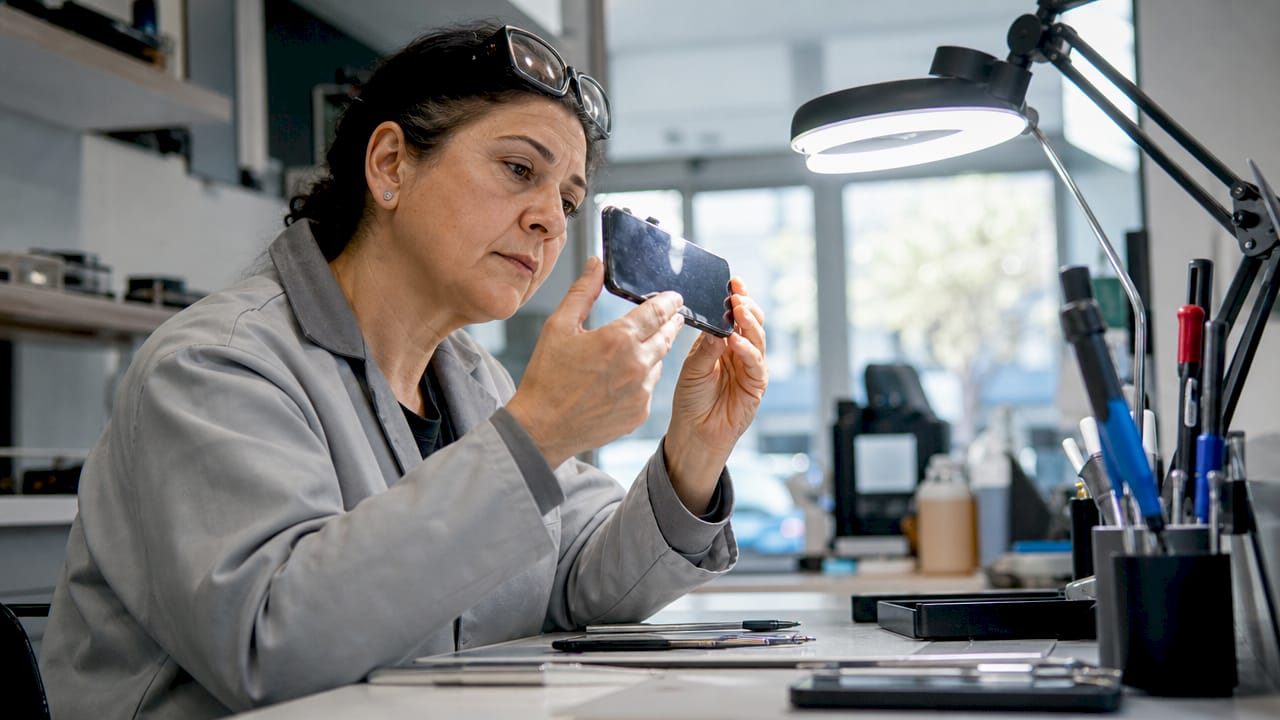
iPhone displays start showing micro-scratches at Mohs hardness level 6. Quartz sand, which rates at level 7, is one of the most common damaging agents. Quartz is present in ordinary dust, beach sand, and the grit that collects inside pockets and bags. Every time your phone sits in a pocket with keys or loose change, fine particles are grinding against the glass surface.
The damage does not stop at the surface. The Wiederhorn mechanism explains what happens next. Moisture chemically weakens the tips of micro-scratches over time, allowing tiny cracks to propagate slowly through the glass. This process is invisible to the naked eye. The screen looks fine right up until a minor knock causes it to shatter completely.
Micro-scratches form from everyday contact with dust, sand, and rough surfaces.
Moisture penetrates these scratches and chemically weakens the glass at the crack tips.
Stress concentrators develop at each scratch point, making the glass structurally weaker.
A relatively minor impact triggers sudden, widespread fracture across the weakened areas.
Repeated minor abrasions worsen structural integrity through stress corrosion mechanisms, making screens more likely to shatter from impacts that would otherwise be harmless. This is why a phone that has survived dozens of drops can suddenly crack from a short fall onto a hard floor.
The practical implication is clear. A screen that looks pristine may already be structurally compromised. You cannot judge glass strength by appearance alone.
Does Ceramic Shield actually prevent cracks?
Apple introduced Ceramic Shield with the iPhone 12 and has refined it with each subsequent generation. The iPhone 17 series features Ceramic Shield 2, which Apple describes as the toughest glass ever used in a smartphone. The ceramic crystal structure within the glass is denser and more uniform than in earlier versions, improving both scratch resistance and drop performance in controlled conditions.
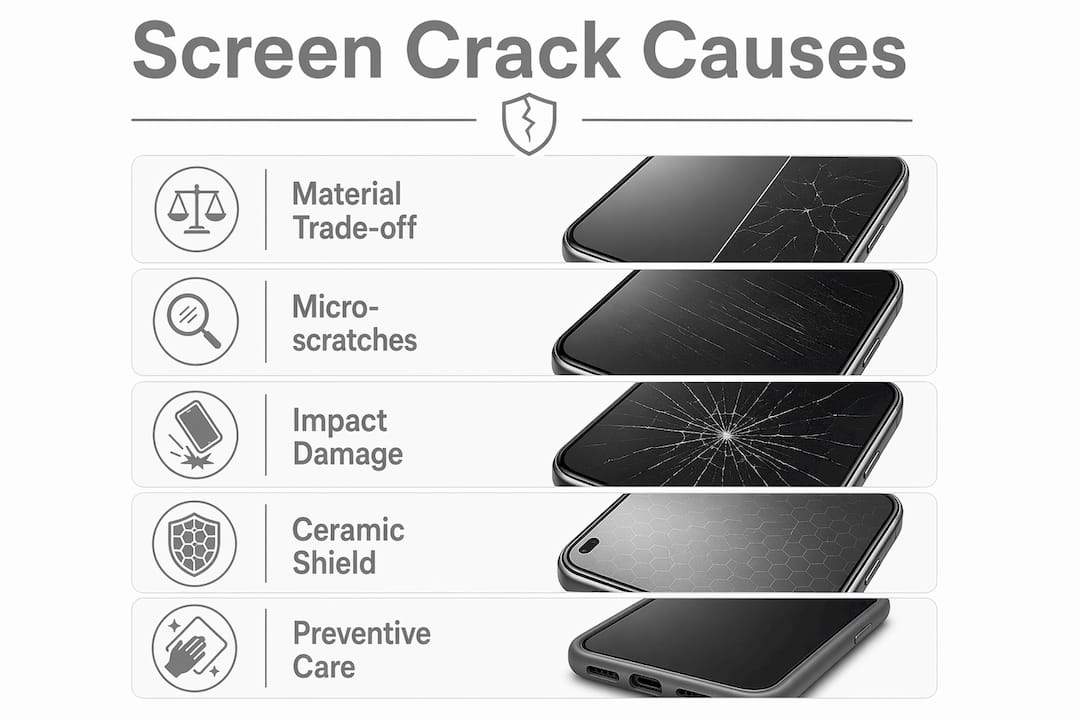
The real-world results are more nuanced. Standardised drop tests show that iPhone 16 Pro Max front glass shatters from a 6-foot drop onto concrete. That is roughly the height of a phone slipping from a shirt pocket while you lean forward. Ceramic Shield 2 performs better in back-glass and edge-impact tests, but the front display remains the most vulnerable point of contact.
Model generation | Glass technology | Front drop resistance | Back glass performance |
iPhone 12–14 | Ceramic Shield (Gen 1) | Improved vs prior glass | Moderate |
iPhone 15–16 | Ceramic Shield (updated) | Moderate improvement | Good |
iPhone 17 | Ceramic Shield 2 | Best to date, not shatterproof | Very good |
One important nuance: standard glass protectors without anti-reflective properties can cancel out the anti-reflective benefits built into Ceramic Shield 2 coatings. Choosing the wrong screen protector can make your display harder to read without adding meaningful protection.
Pro Tip: If you use a screen protector on an iPhone 17 model, choose one specifically rated for Ceramic Shield 2 compatibility. Generic tempered glass protectors may reduce display clarity and glare performance.
How to prevent screen cracks on your iPhone
Prevention is significantly cheaper than repair. Screen repair costs for the latest iPhone models are substantial, and out-of-warranty repairs can reach very high sums depending on the model. The good news is that a few consistent habits reduce your risk considerably.
Use a case with a raised lip. The lip must sit above the screen surface so that when the phone lands face-down, the case absorbs the impact rather than the glass. A case without a raised lip offers almost no front-screen protection.
Apply a tempered glass screen protector. A quality tempered glass protector absorbs the first wave of impact energy and sacrifices itself before the display glass does. Replace it when it cracks rather than leaving a broken protector in place.
Keep your phone away from rough materials. Avoid placing your phone in a pocket with keys, coins, or loose change. Quartz-containing grit in pockets is one of the most common sources of micro-scratch damage.
Avoid placing your phone face-down on hard surfaces. Concrete, stone worktops, and ceramic tiles are particularly damaging contact surfaces.
Consider AppleCare+. Apple’s protection plan covers accidental damage, including screen cracks, for a fixed excess fee. For users who drop their phones regularly, the maths often favours the plan over paying for individual repairs.
If your screen does crack, applying clear packaging tape over the broken glass is a practical first step. It holds the shards in place, prevents injury from sharp edges, and keeps the display functional until you can get it repaired. This is a temporary measure only. A cracked screen needs professional attention promptly, as the signs of further damage can escalate quickly if the phone is used without repair.
Pro Tip: If you drop your phone and the screen looks fine, check the edges and corners carefully. Corner impacts are the most common cause of hidden structural damage that leads to cracking days or weeks later.
Key takeaways
iPhone screens crack easily because glass cannot be both maximally hard and maximally tough at the same time. Prevention through cases, screen protectors, and careful handling habits is the most cost-effective approach.
Point | Details |
Hardness-toughness trade-off | Harder glass resists scratches but shatters more easily under impact. No glass solves both problems fully. |
Micro-scratch accumulation | Quartz dust and everyday grit create invisible weaknesses that worsen over time through moisture-assisted crack growth. |
Ceramic Shield limitations | Even Ceramic Shield 2 fails standardised 6-foot concrete drop tests. Advanced glass reduces risk but does not eliminate it. |
Prevention beats repair | A raised-lip case and tempered glass protector cost far less than an out-of-warranty screen replacement. |
Emergency response | Clear packaging tape over a cracked screen prevents injury and holds the display stable until professional repair. |
My honest view on iPhone screen fragility
Working with cracked iPhones every week gives you a clear picture of what actually causes screens to break. The material science is real and the trade-offs are genuine. Apple is not cutting corners. The hardness-toughness limit is a physics problem, not a manufacturing one. Ceramic Shield 2 is genuinely better than what came before it. But “better” does not mean “safe to drop.”
What I see most often is users who rely entirely on the phone’s reputation for durability and skip basic protection. They buy a £1,000 phone and carry it without a case because it feels premium. Then they are surprised when a single drop onto a pavement cracks the screen. The phone is premium. The glass is still glass.
The other pattern I notice is users who mistake oleophobic coating wear for actual screen damage. A screen that looks hazy or scratched after a year of use is often just showing coating wear. The glass underneath may be structurally sound. Knowing the difference saves unnecessary anxiety and unnecessary repair costs.
My practical advice: match your protection level to your actual habits. If you are careful with your phone and rarely drop it, a slim case with a raised lip and a quality screen protector is enough. If you drop your phone regularly, add AppleCare+ and use a case with genuine shock absorption. Do not rely on warranties as a substitute for prevention. Warranties cover what has already gone wrong. Prevention stops it happening in the first place.
— Joshua
Cracked screen? Rapidrepairsldn can help
A cracked iPhone screen is stressful, but it does not have to stay that way. Rapidrepairsldn specialises in iPhone screen repairs and uses quality replacement parts to restore your display to full working order. Repairs are carried out quickly, with most screen jobs completed the same day.
Whether your screen has shattered from a single drop or developed cracks over time, the team at Rapidrepairsldn can assess the damage and give you a clear, honest quote. Booking is straightforward through the website, and you will not be left waiting weeks for a slot. If your screen is cracked, get it sorted before the damage spreads further.
FAQ
Why does my iPhone screen crack so easily?
iPhone glass must balance scratch resistance and impact toughness, and these two properties conflict at a material level. The result is glass that resists surface scratches but shatters under sudden impact stress.
Does Ceramic Shield make iPhones unbreakable?
No. Ceramic Shield and Ceramic Shield 2 improve drop performance compared to standard glass, but standardised tests confirm that iPhone 16 Pro Max front glass still shatters from a 6-foot concrete drop.
Can micro-scratches really cause a screen to crack?
Yes. Micro-scratches from quartz dust and everyday grit create stress concentrators in the glass. Moisture then weakens these points over time, making the screen far more likely to shatter from a minor impact.
What should I do immediately after my iPhone screen cracks?
Apply clear packaging tape over the broken area to hold the glass in place and prevent injury from sharp edges. Avoid pressing on the screen and book a professional repair as soon as possible.
Is a screen protector worth using on a newer iPhone?
Yes, but choose carefully. Generic tempered glass protectors can reduce display clarity on models with Ceramic Shield 2. Select a protector specifically rated for your iPhone model to maintain display quality and add meaningful impact protection.
Recommended
Comments