
Motherboard repair benefits list: your complete guide
- Jul 9
- 8 min read

Motherboard repair is defined as the process of fixing faults at component level, targeting specific failed parts on a circuit board rather than replacing the entire unit. For electronics enthusiasts and everyday consumers alike, the motherboard repair benefits list covers three clear wins: lower costs, reduced electronic waste, and preserved device performance. Component-level repair addresses individual failures such as blown capacitors or damaged power circuits, making it a precise and practical alternative to full board replacement. Rapidrepairsldn specialises in exactly this kind of targeted repair, and the advantages are more substantial than most people realise.
1. What are the main cost benefits of motherboard repair?
Repairing a motherboard costs significantly less than replacing it. Repairs under 40% of replacement cost are considered cost-effective by industry experts, meaning you often spend a fraction of what a new board would set you back. That threshold matters because replacement boards for laptops and proprietary systems frequently carry high price tags, and the labour to install them adds further expense.
The savings extend beyond the board itself. Avoiding a full device replacement means you keep your existing peripherals, storage drives, and software licences without additional outlay. For businesses running specialised workstations, that figure compounds quickly when you factor in lost productivity during a rebuild.

Transparent pricing makes the decision easier. Flat-rate repair quotes are given upfront, and diagnostics are often free or low cost. You know exactly what you are committing to before any work begins, which removes the financial uncertainty that puts many people off repair in the first place.
Here is what the cost picture typically looks like:
Component repair (capacitors, power ICs): usually a fraction of board replacement cost
BGA reflow or chip-level work: more involved but still well below a new board price
Liquid damage cleaning and restoration: targeted treatment avoids a full write-off
Diagnostic fee: often free or absorbed into the repair quote
Pro Tip: Get a written quote before authorising any repair. A reputable shop will provide one at no obligation, so you can compare the cost against replacement before committing.
2. How does motherboard repair contribute to environmental sustainability?
Repairing a motherboard rather than discarding it directly reduces electronic waste. Repair minimises e-waste, keeping circuit boards, solder, rare earth metals, and plastics out of landfill. That matters because manufacturing a new motherboard consumes significant energy and raw materials, including copper, gold, and lithium compounds that are costly to extract.
Every device repaired is one fewer device manufactured. The carbon footprint embedded in producing a new board, from mining to fabrication to shipping, is avoided entirely when a skilled technician fixes the existing one. Local repair services reduce transport emissions further, since the device travels to a nearby workshop rather than across international supply chains.
The environmental case for repair is straightforward:
Fewer boards discarded means less toxic material in landfill
No new manufacturing means no additional resource extraction
Local repairs cut transport-related carbon emissions
Extended device lifespan delays the consumption cycle
Repair shops play a real role in sustainability. Rapidrepairsldn’s component-level approach means boards that would otherwise be written off are returned to full working order, extending their useful life by years rather than months.
3. Which device reliability and performance benefits come from repairing motherboards?
Repairing the original motherboard preserves your existing software and hardware configuration. Replacement often requires lengthy reconfiguration, causing downtime that repair avoids entirely. For anyone running a calibrated workstation, a production machine, or a device with proprietary software tied to specific hardware IDs, that reconfiguration is not a minor inconvenience. It can take days.
Repair keeps everything intact. Your operating system, drivers, application settings, and hardware profiles remain exactly as you left them. The device returns to you working as it did before the fault occurred, with no reinstallation required.
Here are the key reliability advantages in order of impact:
Configuration preservation: software environments, hardware profiles, and licences remain untouched
Reduced downtime: repair turnaround is faster than sourcing, installing, and reconfiguring a replacement board
Warranty assurance: 90-day to 12-month warranties back professional repairs, covering recurrence of the same fault
Compatibility certainty: the repaired board is the exact model your device was designed around, eliminating compatibility risks
Pro Tip: Ask your repair shop whether the warranty covers the specific fault repaired or the whole board. The distinction matters if a related component fails later.
Proprietary hardware is where this benefit is most pronounced. Replacing a motherboard in a device with locked firmware or manufacturer-specific components often triggers activation failures or hardware mismatches. Repair sidesteps all of that.
4. What common motherboard faults can professional repair fix?
A wide range of motherboard faults are repairable at component level. Typical repairs include capacitor replacement, power IC fixes, BGA reflow, and liquid damage cleanup. Each of these targets a specific failure point rather than condemning the entire board, which is precisely why repair is so cost-effective.
Professional repair techniques include microscopic soldering, schematic tracing, and board-level diagnostics using BGA reflow stations. These methods localise faults accurately, so only the damaged component is addressed. That precision is what separates qualified repair from guesswork.
Fault type | Repair method | Typical turnaround |
Blown capacitors | Component replacement | 1–3 days |
Power IC failure | Chip-level replacement | 3–5 days |
BGA chip issues | BGA reflow or reballing | 5–10 days |
Liquid damage | Ultrasonic cleaning, component check | 3–5 days |
Charge port failure | Micro-soldering replacement | 1–3 days |
Standard repairs complete in 3–5 business days, while complex BGA or chip-level work may take up to 10 days. Simple diagnostics are often completed within a single day. That timeline compares favourably to waiting for a replacement board to be sourced and delivered, particularly for less common or older hardware.
Water damage is one of the most common reasons people assume a device is beyond saving. In reality, water-damaged motherboards are frequently recoverable with prompt professional cleaning and targeted component replacement.
5. How does repair compare to full motherboard replacement?
Repair is the better option in the majority of fault scenarios. The repair vs replacement decision comes down to fault severity, cost threshold, and device age. When the repair cost sits below 40% of replacement value, repair wins on economics alone.
Replacement carries hidden costs that repair avoids. A new board requires installation labour, potential firmware updates, driver reinstallation, and in some cases a full operating system setup. Each of those steps adds time and expense that rarely appears in the initial replacement quote.
Repair-first strategies are increasingly the preferred approach for consumers and businesses as hardware prices rise. Keeping a working device operational through targeted repair is both financially and practically sound. The only scenario where replacement clearly wins is when the board has suffered catastrophic physical damage affecting multiple layers or critical traces beyond economical repair.
6. Does motherboard repair extend the overall lifespan of your device?
Motherboard repair directly extends device lifespan by resolving the fault that caused the failure. A device with a repaired board functions identically to one that never failed, provided the repair addresses the root cause rather than a symptom. That is why component-level expertise matters so much. Many repair shops lack the equipment or skills for board-level work and default to replacement instead.
Extending lifespan also delays the need to purchase a new device entirely. For a laptop or tablet that is otherwise in good condition, a successful motherboard repair can add several years of productive use. That is a meaningful return on a repair investment, particularly for higher-specification machines where replacement would mean significant expenditure.
Understanding what a motherboard does helps you appreciate why fixing it rather than replacing the whole device makes sense. The board coordinates every component in your machine. Repairing it restores that coordination without disturbing anything else.
Key takeaways
Motherboard repair delivers clear, measurable advantages in cost, environmental impact, and device reliability that make it the preferred choice over replacement in most fault scenarios.
Point | Details |
Cost savings | Repairs costing under 40% of replacement value are economically sound and avoid hidden rebuild costs. |
Environmental benefit | Repairing rather than discarding boards reduces e-waste and avoids the resource cost of manufacturing new hardware. |
Configuration preserved | The original software environment, hardware profiles, and licences remain intact after repair. |
Warranty protection | Professional repairs carry 90-day to 12-month warranties, covering recurrence of the same fault. |
Faster return to use | Standard repairs complete in 3–5 days, often faster than sourcing and installing a replacement board. |
Why I think most people underestimate motherboard repair
The most common misconception I encounter is that a faulty motherboard means the device is finished. That assumption costs people money and generates unnecessary waste. The reality is that the majority of board failures are isolated to one or two components, and a qualified technician with the right equipment can fix them in days.
What surprises people most is how much they stand to lose by replacing rather than repairing. It is not just the cost of the new board. It is the hours spent reinstalling software, reconfiguring settings, and dealing with licence transfers. Those hours have real value, and repair avoids all of them.
The repair industry does not always help itself here. Many shops decline board-level work because it requires specialist equipment and training. That leads consumers to believe repair is not possible when it simply is not offered locally. Seeking out a shop that genuinely practises component-level repair, rather than one that swaps boards wholesale, makes a significant difference to both your wallet and your device.
Motherboard repair is a skilled craft. The technicians who do it well use microscopes, schematic diagrams, and precision soldering equipment. Supporting that expertise is worth it, both for your device and for a more sustainable approach to electronics ownership.
— Joshua
Rapidrepairsldn: expert motherboard repair with a warranty you can trust
Rapidrepairsldn offers component-level motherboard repair for laptops, phones, and tablets, with transparent pricing and a warranty on every repair. You receive a clear quote before any work begins, and the team uses professional-grade diagnostics to identify the exact fault rather than replacing parts unnecessarily.
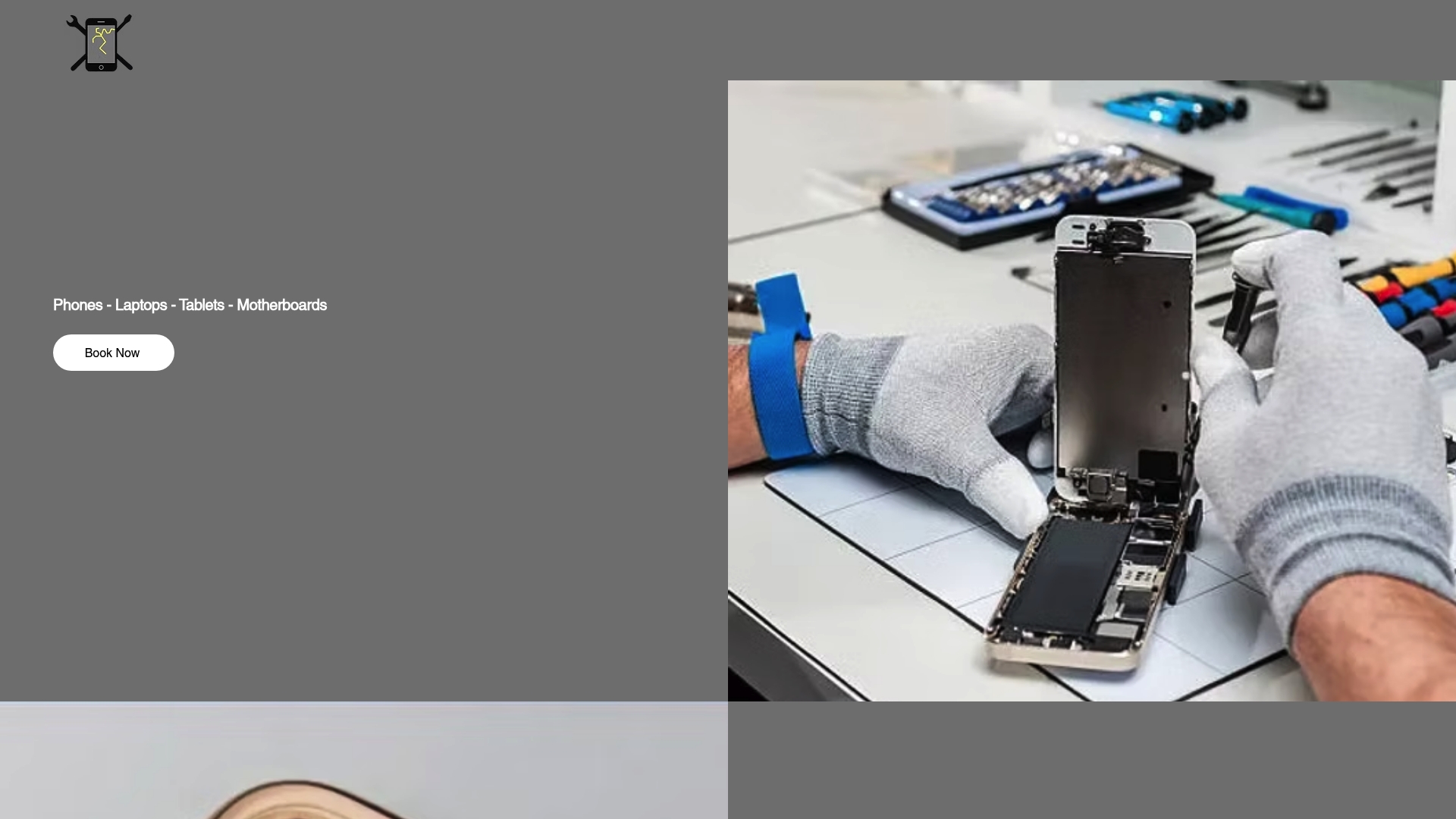
Whether your device has suffered liquid damage, a power failure, or a BGA fault, Rapidrepairsldn’s technicians have the equipment and experience to fix it properly. Check out the laptop repair service to get a quote or book a diagnostic. Repair is almost always the smarter first step, and Rapidrepairsldn makes it straightforward.
FAQ
Is motherboard repair worth it financially?
Motherboard repair is worth it when the cost sits below 40% of the replacement board price. At that threshold, repair saves money and avoids the additional labour and reconfiguration costs of fitting a new board.
How long does a typical motherboard repair take?
Standard repairs take 3–5 business days. Complex BGA or chip-level work may take up to 10 days, while simple diagnostics are often completed within one day.
What warranty comes with a professional motherboard repair?
Most professional repair shops provide a 90-day to 12-month warranty covering recurrence of the same fault. Always confirm the warranty terms before authorising work.
Can liquid-damaged motherboards be repaired?
Yes. Liquid-damaged boards are frequently recoverable through ultrasonic cleaning and targeted component replacement, provided the device is brought in promptly and the damage has not corroded critical traces beyond repair.
How do I know if my motherboard fault is repairable?
A qualified technician will diagnose the fault using schematic-guided board-level testing. Common repairable faults include blown capacitors, power IC failures, BGA chip issues, and charge port damage. A phone motherboard cost guide can help you understand typical pricing before you book a diagnostic.
Recommended
Comments